 By Ryan Butler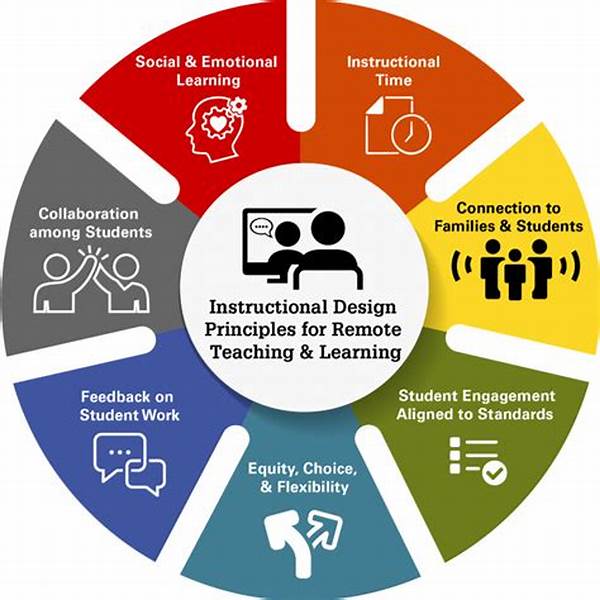
 0
0
 0
0
The transition from traditional classroom settings to online platforms has necessitated the establishment of remote teaching standards evaluation. This process plays a critical role in ensuring that educational institutions maintain and enhance the quality of their digital instruction. In this era of digital learning, a comprehensive evaluation of these standards is imperative to determine the effectiveness and efficiency of remote teaching methods. The evaluation encompasses various aspects: curriculum delivery, technology integration, teacher preparedness, and student engagement.
Read Now : Graduate Recruitment Programs 2023
Importance of Remote Teaching Standards Evaluation
Evaluating remote teaching standards is essential for several reasons. Firstly, it provides educational institutions with insights into the effectiveness of their teaching methods and technological tools. By assessing these standards, schools and colleges can identify strengths and weaknesses in their remote teaching strategies. Furthermore, the evaluation process helps ensure that the educational objectives are being met, even outside the traditional classroom environment. This is particularly crucial given the increasing reliance on digital platforms for learning. Moreover, such evaluations facilitate the development of best practices that can be shared across institutions, fostering an environment of continuous improvement and adaptation. Through a well-executed remote teaching standards evaluation, educators can ensure that students receive a quality education, regardless of the learning medium.
Key Components of Remote Teaching Standards Evaluation
1. Curriculum Alignment: Ensuring that the curriculum delivered remotely aligns with established educational standards.
2. Technology Integration: Assessing the effectiveness of the tools and platforms used in remote teaching.
3. Teacher Preparedness: Evaluating the training and readiness of educators to conduct online classes.
4. Student Engagement: Measuring the level of student participation and interaction in a virtual setting.
5. Outcome Measurement: Analyzing the learning outcomes achieved through remote teaching compared to traditional methods.
Read Now : Fashion Illustration Summer Camps
Challenges in Remote Teaching Standards Evaluation
The remote teaching standards evaluation process is not without its challenges. One significant challenge lies in the heterogeneity of technological access among students. Differences in internet connectivity and device availability can impact the uniformity of evaluations. Additionally, the rapid pace of technological advancement often outstrips the ability of institutions to update their evaluation criteria effectively. As such, staying abreast of these advancements is crucial for a robust evaluation process. Moreover, ensuring the validity and reliability of assessment tools used for evaluation presents further difficulty. Nevertheless, overcoming these challenges is imperative to establish effective remote teaching practices.
Technological Considerations in Remote Teaching Standards Evaluation
Understanding the technological landscape is crucial for remote teaching standards evaluation. Institutions must assess whether the tools used facilitate effective learning and engagement. Compatibility issues, ease of access, and user-friendliness are aspects that require thorough examination. Additionally, ensuring that technology accommodates students with diverse learning needs is essential. This involves a detailed evaluation of both the hardware and software employed. Effective technology integration enhances the learning experience and provides a seamless transition from traditional to digital classrooms, underscoring the significance of its evaluation in the remote teaching context.
Strategies for Improving Remote Teaching Standards Evaluation
Improving remote teaching standards evaluation involves adopting innovative strategies that focus on comprehensive criteria and multi-dimensional assessment. Institutions should employ a combination of qualitative and quantitative data to gain an in-depth understanding of the remote teaching environment. Furthermore, developing an iterative feedback loop that involves educators, students, and stakeholders is critical. Such collaboration ensures the standards are not only met but continuously enhanced. Additionally, investing in professional development for teachers can significantly elevate the quality of remote education, as properly trained educators are pivotal in executing effective digital teaching methodologies.
Conclusion of Remote Teaching Standards Evaluation
In summary, remote teaching standards evaluation is imperative in maintaining educational excellence in an increasingly digital landscape. It ensures that teaching practices are adapted to meet the evolving needs of learners and that educational institutions remain accountable for providing high-quality instruction. By focusing on key areas such as technology integration, teacher readiness, and student engagement, the evaluation process contributes to a robust educational framework. Lastly, despite the challenges this evaluation presents, its effective implementation leads to a more adaptive and resilient education system, prepared to face future disruptions or shifts in teaching paradigms.


